
Toren van Babel: een terugblik
In recent years, the towers in and around the NDSM shipyard have been springing up like mushrooms. The Tower of Babel is a building of a completely different caliber than the crane, residential flats and other structures that fill out the horizon on the IJ. This Tower of Babel is not a place for people, but for ideas and stories created by Amsterdammers. Watch the video interviews that Anna Sidorchik made of all the workshops and the artists here. The frame of the tower is now still there until the end of June 2022. A mailbox has currently been hung up where you can leave your tips for the ideal city and we are brooding on a follow-up phase of the (physical) tower. To do this, keep an eye on the website and socials. Read briefly about the workshops given and the makers below. Huge thanks to all creatives, participants, the Mondriaan Fund and the AFK.
NDSM-werf Foundation and TAAK Foundation invited eight artists to provide workshops for city residents from their own disciplines. The result: an extraordinary collection of works of art that symbolize the city's countless voices. Unlike in the Biblical story, where polyphony actually led to the decline of construction, polyphony was precisely the strength of the work here. In this article, we look back one by one at the different artists of this project, which was based on an idea by Guido van der Werve, and how the works shaped the tower.
Watch here the video interviews that Anna Sidorchik made with all artists.
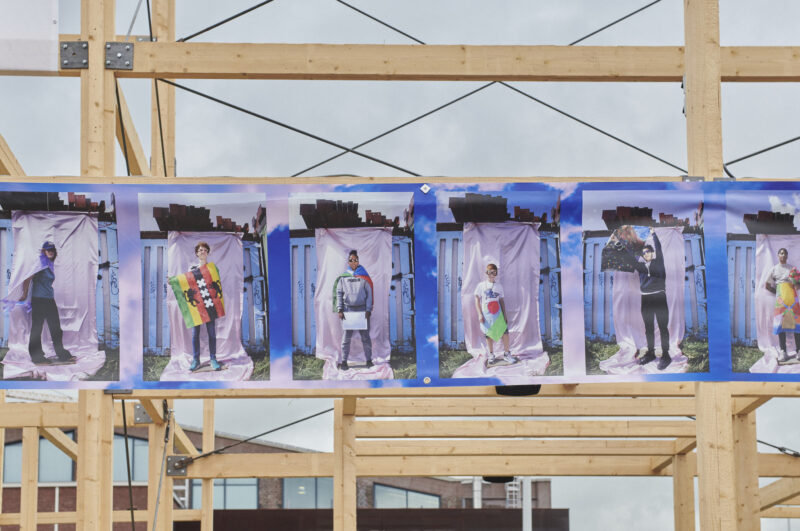
1. Perrine Philomeen (fashion stylist and creative director)
“Like many people, I see fashion and fashion as an extension of your identity. I always like to explore the boundaries of that in my workshops.”
In the ideal city of Perrine Philomene (1992) people no longer say dress to impress, but dress to empower! The collective's youngest artist allowed young people to experiment with textiles as a form of self-expression. Together, they worked on flags — a unique textile symbol for each participant — that still proudly flutter in the installation, including photographic images of participants showing their own flags as fashion items.
2. Mick La Rock (graffiti artist)
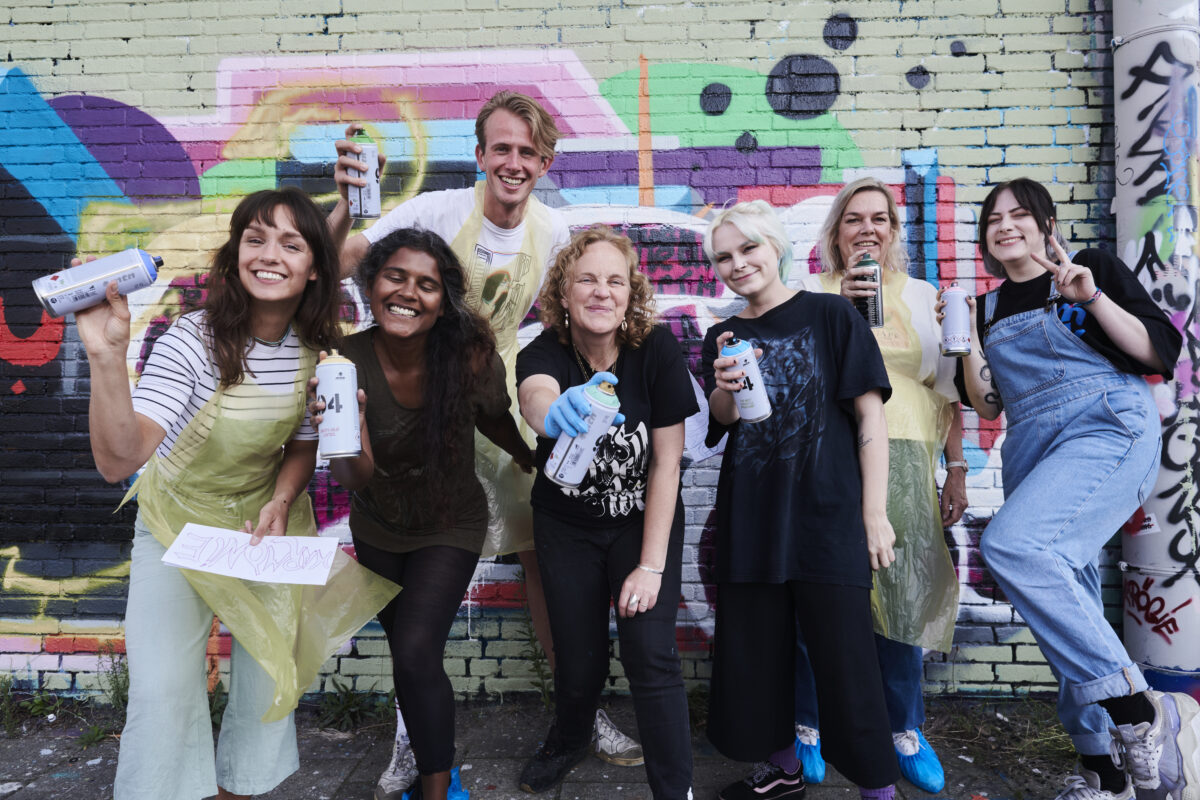
“In a graffiti workshop, you give people a bit of freedom that they normally don't experience.”
Going wild with spray cans was part of most participants in these workshops, provided by a famous graffiti artist Mick La Rock (1970), maybe not in everyday life. This made it all the more special to let their writing run wild and their ideal image of the city to pieces to translate. In collaboration with Jeffrey Kroese from Vinger.nl, Mick processed the results into two collages on banners, which can be seen at the top of the tower.
3. Rianne van Duin (graphic designer)
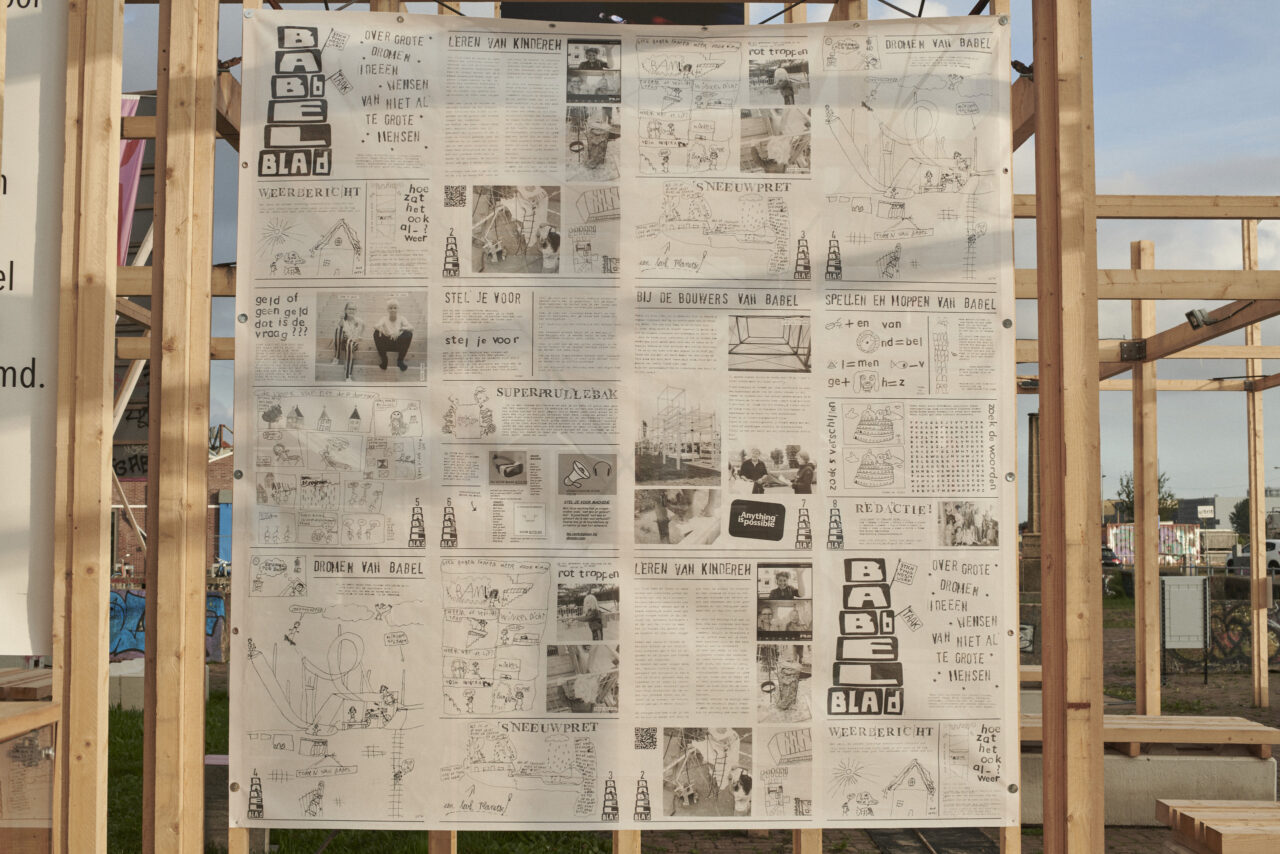
“Children get a bigger voice through these kinds of projects. Then they're suddenly in the newspaper and they have all kinds of things to say that we could take a little more to heart.”
The little people among us also have a big voice and this is for Rianne van Duin (1978) — graphic and 3D designer working at NDSM — an inexhaustible source of inspiration. Together with students from Klein Amsterdam primary school, she created a newspaper for Tower of Babel in which the children themselves make their wishes, dreams and ideas for the city visible in text and images. These newspapers are in a special cabinet in the tower and are free for everyone to take along.
4. Fouad Lakbir (photographer and storyteller)
“The moment you tell a story, you not only create space for your story, but also space where another story can be told. By doing that, you make way for dissenters, for people who live their lives differently.”
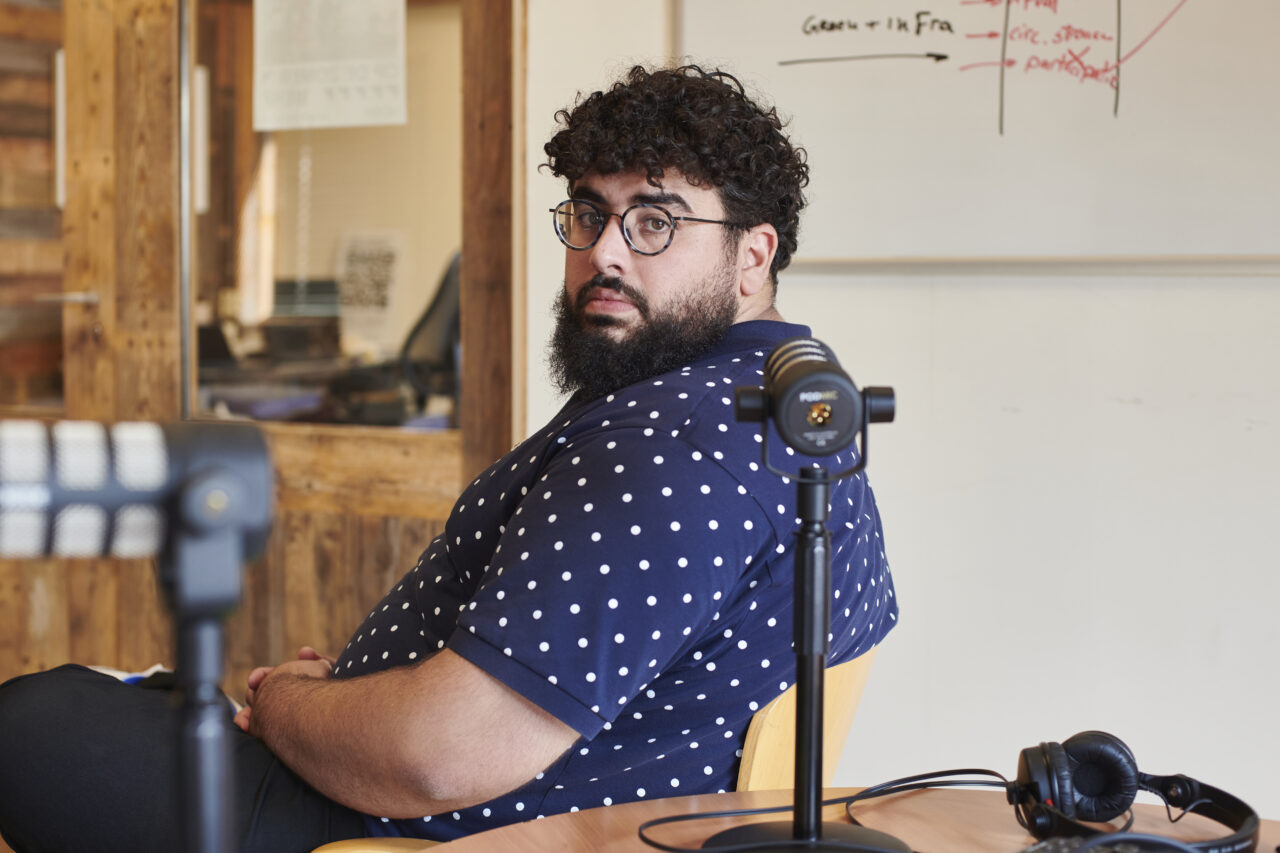
An individual story doesn't have to be individualistic at all. That became clear during the storyteller and photographer workshops. Fouad Lakbir (1990). What is your best memory of a city? Based on this question, he started talking to several Amsterdammers, after which they interviewed each other about their ideal city. The special conversations he recorded during the workshops came together in a soundscape that can be heard in Tower of Babel.
5. Olfa Ben Ali (visual artist and director)
“In my view, art has more impact on society when it is created in collaboration with others.”
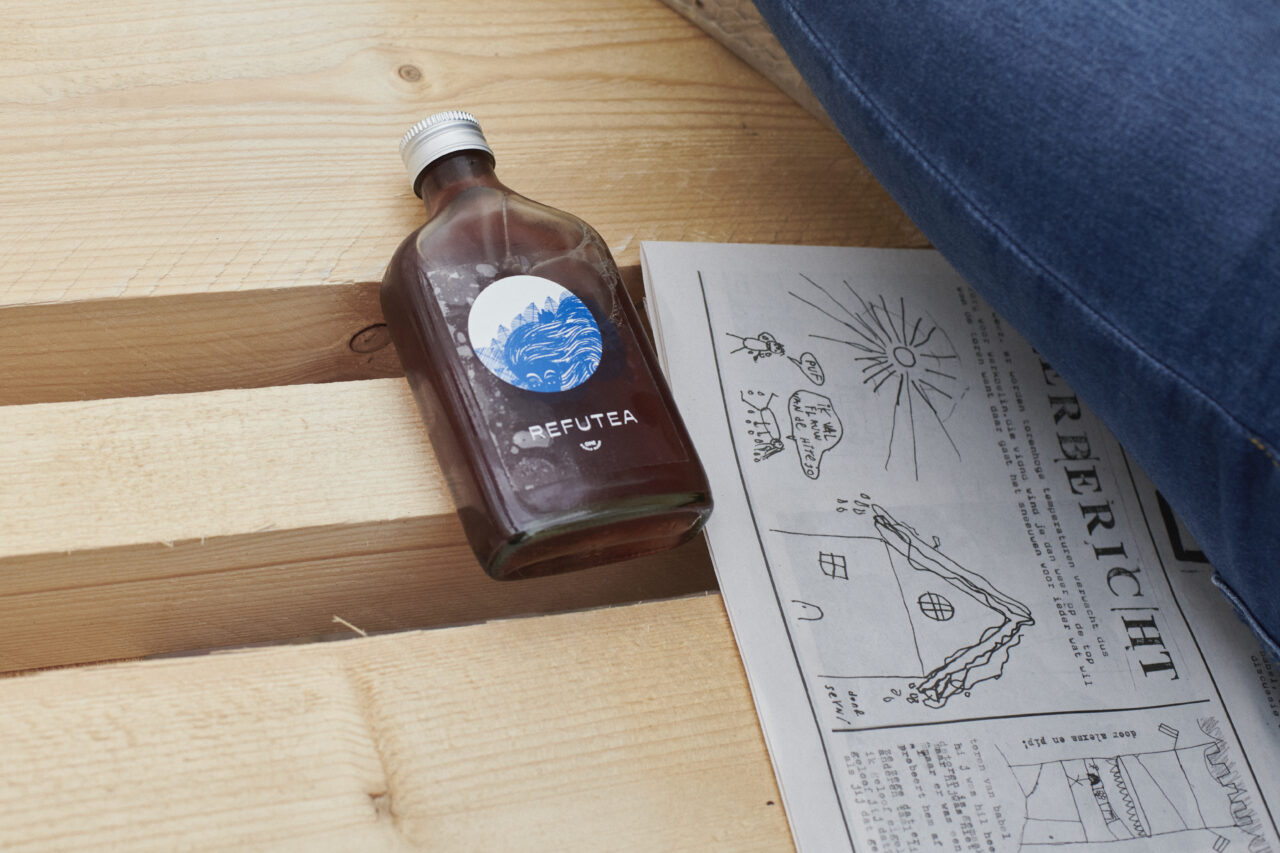
As part of her larger project 'REFUTEA', French-Tunisian visual artist investigated Olfa Ben Ali (1974) during her workshops with refugees and undocumented people from the AZC, the ritual value of tea. The results of the tea workshop were translated into a poem, an advertising image on a banner and a video projection that bring together the participants' diverse stories about tea and “home” memories. The iced tea was actually served to visitors during the opening of the Tower of Babel.
6. Brendan Jan Walsh (cellist, composer, conductor)
“We need to realize that we can achieve great things as humans, but in how we implement this, and why, there must be room for everyone.”
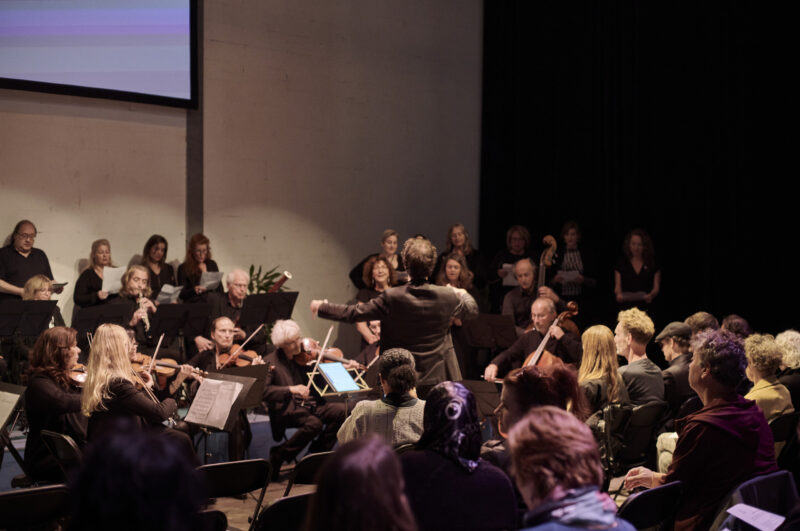
Working together on the city of the future means for Brendan Jan Walsh that the result contains a lot of individual expressions. He therefore prefers to see a modern Tower of Babel not as a big building made of glass, steel and concrete, but as living work, where someone can say, for example: “Hey, do you see that flower there? That was my idea!” For Tower of Babel, he gave a literal expression to “polyphony”. At the opening of the project, a choir and a chamber orchestra performed a special piece under his direction, composed by Guido van der Werve.
7. Bengin Dawod (architect and urban planner)
“A city must be developed by the people themselves. This must be able to take place in an organic and spontaneous way.”
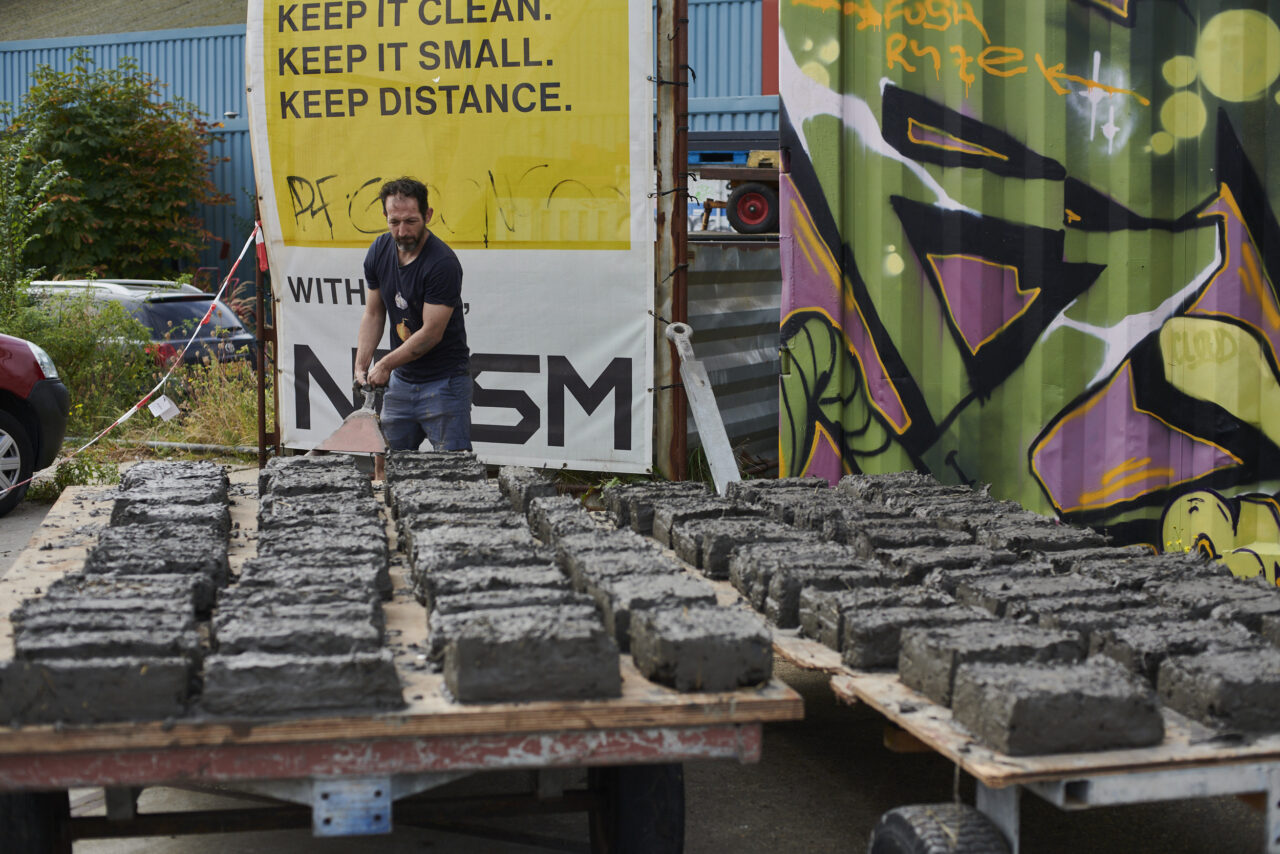
Letting people help build their city themselves, both literally and figuratively, brings social commitment. Architect and urban planner helped Tower of Babel Bengin Dawod (1982) participants in creating bricks from natural materials, such as clay and hay, that now lay the foundation for the Tower of Babel as a wall. According to Bengin, these types of low-threshold yet collective activities give people a sense of ownership in their city.
8. Tina Lenz (design anthropologist)
“What I really like about this project is that I've been to more places inside.”
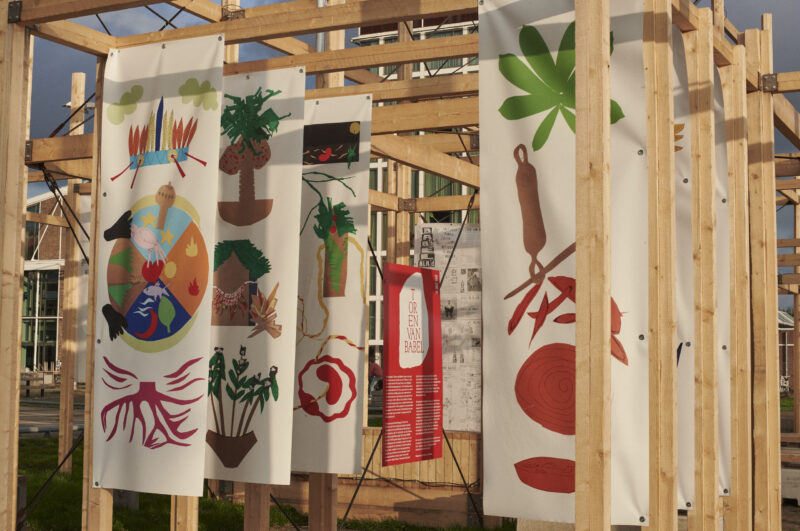
By stepping into various worlds yourself, design anthropologist offers Tina Lenz (1972), together with the participants of her workshops, a gateway to the Tower of Babel. For this project, she worked with Surinamese women, men from the El Moutaquine mosque at the NDSM shipyard, visitors to the Taalcafé near Huis van de Wijk de Evenaar and her friends at the Chinese bookstore Ming Ya. They transform personal stories and symbols with paper into colorful banners that are positioned as four gates in the tower.
What does your ideal city look like? Which voices are included in this? And how can we have a lasting conversation about this with art, culture, games and meetings? These are the questions that came up at Tower of Babel, and will hopefully continue to be answered in a fascinating way not only at the NDSM shipyard, but throughout Amsterdam.
Come and have a quick look at Tower of Babel in the fall of 2021 and be inspired! The tower (decorated with most of the works) will remain on display until the end of 2021.