

NDSM Lusthof: van ontwerp tot plantenapotheek
NDSM Lusthof is an architectural garden designed by Studio Ossidiana and has been on display at NDSM since July 2024. But which plants can be found in this garden exactly?
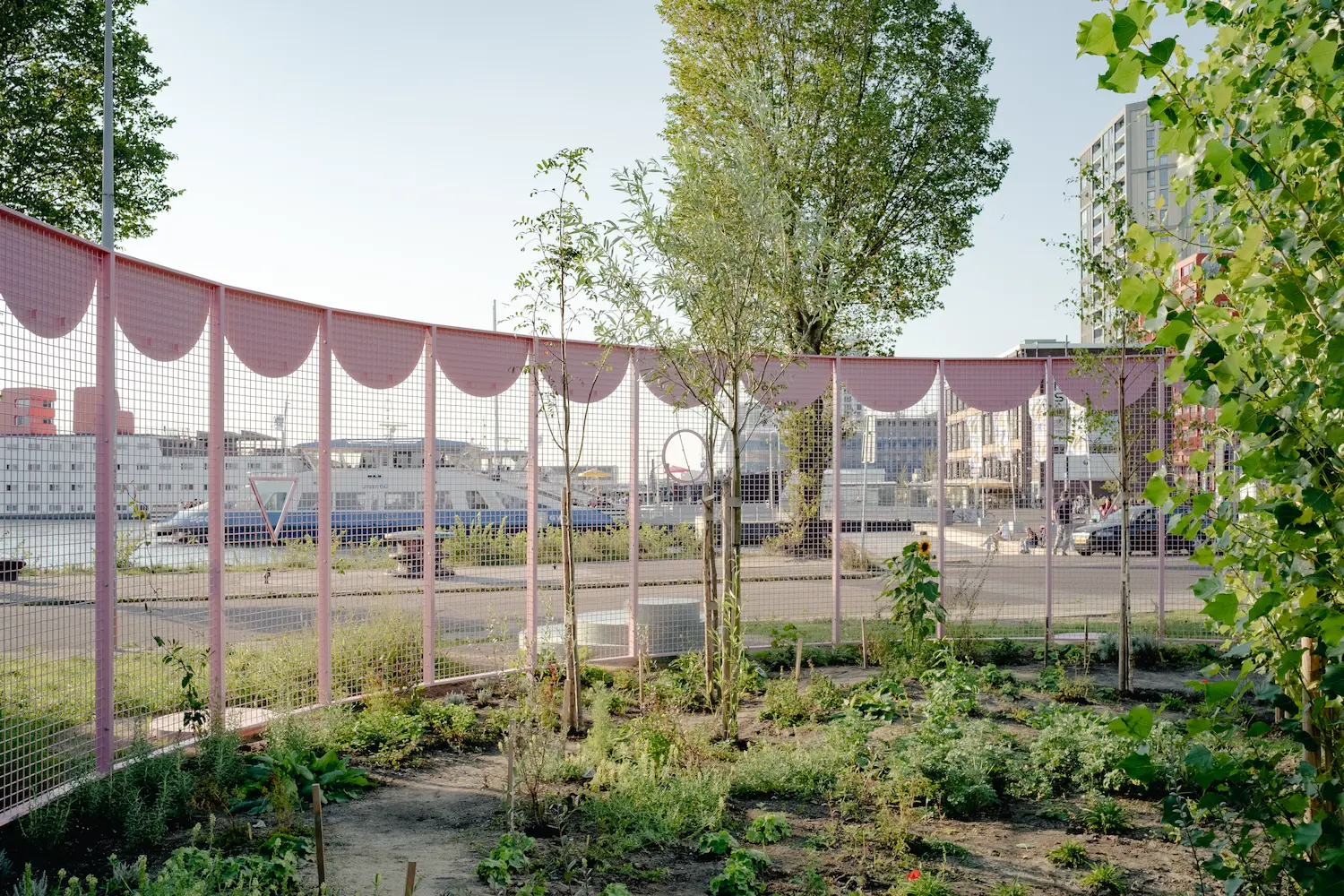
With the installation, Studio Ossidiana questions about private and public, and who has the right and access to green and exclusive nature in today's city. NDSM Lusthof, like the former Lusthoven, which were intended for the richer people of Amsterdam, is surrounded. Now not through hedges, but through a playfully designed and colored fence with peepholes that make you curious. The architectural garden has a rounded shape that looks like an observatory, a place where the world can also be seen from the inside out.
.webp)
In addition to the design of the fence and infrastructure, the plants that grow in NDSM Lusthof also have a link with the pleasure gardens of yesteryear. In the Lusthoven at the end of the seventeenth century, all kinds of botanical finds were collected. The plants at NDSM Lusthof are also inspired by the Turkish Ottoman gardens, where medicinal herbs as well as trees and flowers flourish. It is an agricultural garden in the broadest sense of the word where plants have a 'function', from pollinators for bees and butterflies to tea herbs. A true “Living Library” in the words of Studio Ossidiana.
Plants | NDSM Lusthof
Landscape Architect Arja Helmig of Yes studio brought this theme to life in her design for the plants at NDSM Lusthof. The richness of gardens such as “Living Library” on the one hand, and on the other, highlights the fact that green spaces in an urban environment are not always accessible in the plants. Accessibility to nature is important because plants and green areas have a proven positive effect on human physical and mental health. In fact, for some people, plants are the only available and reliable medicine for certain conditions or types of pain. That is why, when designing the green, urban oasis NDSM Lusthof, Arja partly chose plants that have functional medicinal properties: a pharmacy garden. Like a pharmacy, the garden is not always open and you need to provide the necessary information before you can pick from it.
The functionality of the plants in NDSM Lusthof is not limited to those for humans. The design is precisely tailored to a balance between people, plants and animals. Plants are absolutely essential for birds, bees and butterflies. That is why, in NDSM Lusthof, Arja chose a combination of native trees, shrubs and herbs, species that are best for our native small animals. In this enclosed garden, bees and butterflies can pollinate to their heart's content.
The design
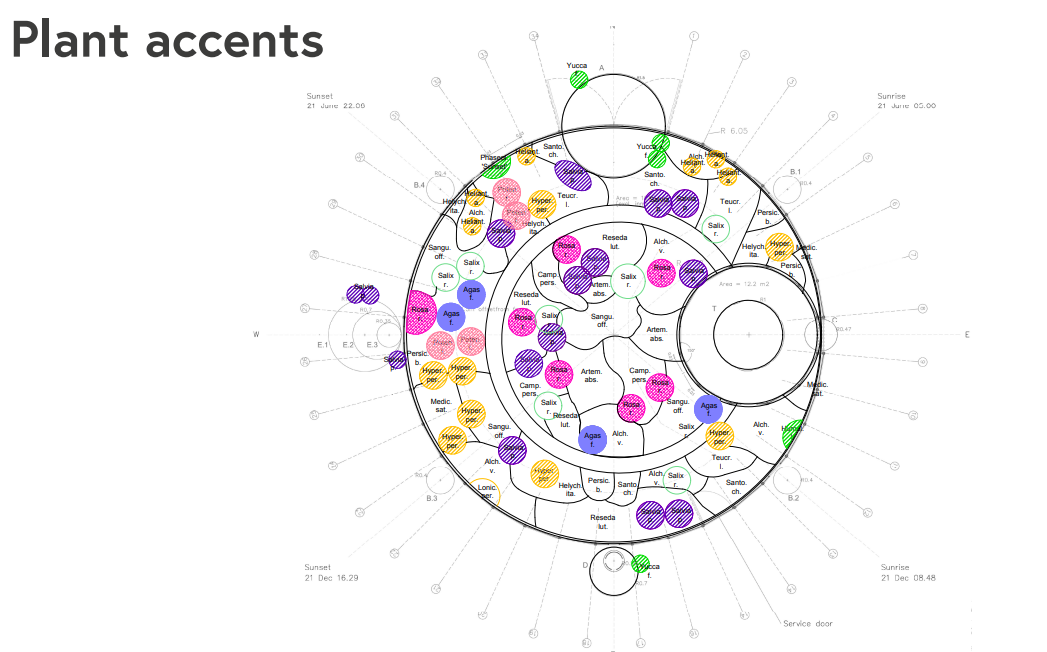
The final design of the growing parts of NDSM Lusthof makes it a green urban oasis. Following Studio Ossidiana's design inspired by the shape of an observatory, the plants in NDSM Lusthof were also planted in rounded shapes. The garden is a place for recovery, which implies change, improvement, care and maintenance. The changing nature of the garden over the seasons and the growth over the years reflect this, but the changing perspective on the accessibility of green spaces for people also contributes to this.
NDSM Lusthof has also become a community place: a personal space with tea ceremonies led by gardener Maryam Kalami, guided tours and a dedicated volunteer team of local residents who maintain the garden. When working in the garden or activities take place, the garden is open. It's a place where people can't just walk in all the time and nature can take its course undisturbed.
The garden is about care and warmth, both between people and between people and nature. This is emphasized by the choices of the mainly native plants in the garden, with their functions for humans, animals and nature.
For plants, animals and humans, example: the White Willow
If you look through the peepholes of the NDSM Lusthof fence, you will see the White Willow (Salix Alba) The bark of the Salix Alba has been used by various cultures for thousands of years as a remedy for colds, fevers and joint pain. The active substance, salicylic acid, was first isolated and then produced in a synthetic form as a medicine called acetylsalicylic acid (aspirin). In the past, people simply chewed on a willow twig for gout and pain. Also a handy tip if you're walking in the polder and your ankle sprains!
In addition to its medicinal functions, we can scale white willow trees among the absolute best in terms of biodiversity. Countless plants, birds and insects live on and in the crown and trunk. Research shows that more than 450 different species of insects can occur on a willow tree. This is important, because insect life is not doing well.
Watch the video below!

credits
Photographer: Riccardo de Vecchi & Arja Helmig