Explore
Onderzoek Crowdmonitoring op NDSM

Onderzoek Crowdmonitoring op NDSM

By Stichting NDSM-werf and Tapp
2025
Stichting NDSM-werf, in collaboration with Tapp and Life-Electronic, is researching visitor numbers at the NDSM-wharf.
No items found.

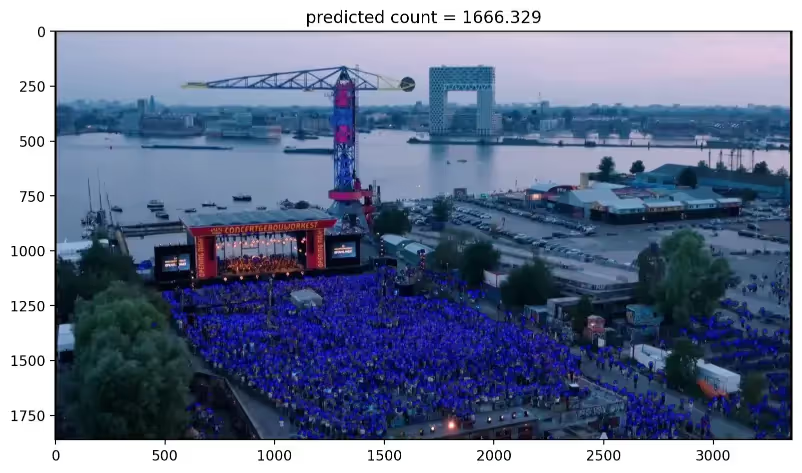
How much is the public space at the NDSM shipyard actually used? Stichting NDSM-werf has partnered with Tapp's city planners at the Marineterrein in Amsterdam to answer this question. Using sensors that measure completely anonymously how many people visit a certain location using a specially developed algorithm, we count how many people enter and leave this specific area of the construction site. It's actually like someone guessing how many people pass by every day with a pen and paper; this is what we call “crowd monitoring”. No video footage is stored in this process, so visitors are not in the picture, are not filmed, but are counted!

In this way, we can manage the area and improve our services in a sustainable way, so that visitors can fully enjoy the NDSM shipyard. The data that is collected about how many people visit NDSM is fully publicly accessible and updated in real-time. Below is a summary of the data.

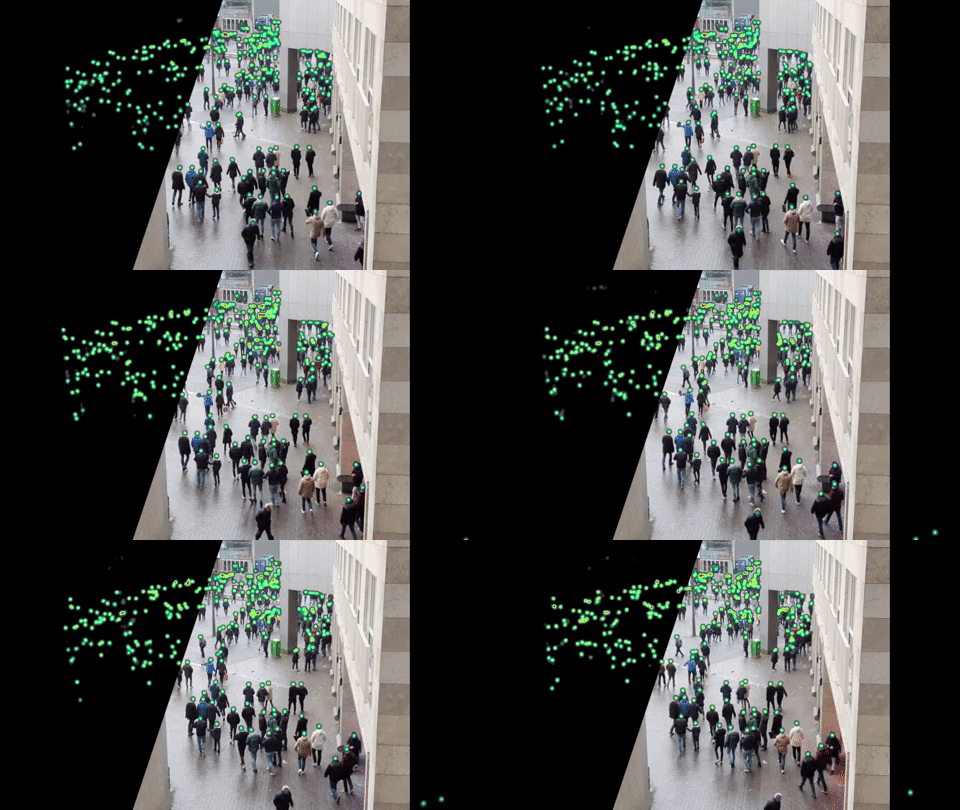
With this crowdmonitoring system no personal data is stored. In doing so, we use 3D sensors where the data is immediately anonymized. This is done using an algorithm that has been trained to recognize the shape of people on recordings without saving these images. This allows the sensors to count how many people there are within a certain area without filming and/or disturbing images. Below is a visualization of what this looks like at the Johan Cruijff Boelevard in Amsterdam. The system takes the form of people, after which a census is made of the number of people within the defined area. As shown below, faces are anonymized and no images are stored. In addition to these types of sensors, there is also one abacus at the NDSM shipyard (near Smederijplein) that counts the number of traffic movements (two-wheelers, pedestrians, cars and heavy vehicles). The results of those counts are also public and can be found at this page.
The design of the system is based on the values and principles set out in the TADA manifesto about the responsible digital city. In the development and implementation of this system, we worked with the Responsible Sensor Toolkit that was drawn up in collaboration with the municipality of Amsterdam. At home, we have the Responsible Sensing Toolkit Decision Canvas completed and we will keep it up to date as the research progresses. The sensors at the NDSM shipyard can be found in the sensor register of Amsterdam, where you can also find all the other active sensors in the city.

We understand that you may have questions, comments, or feedback for us about this research. You can reach us at redactie@ndsm.nl or call 020-4931070 to have a conversation or if you want more information about this project.

About Tapp

Tapp, based at the Marineterrein in Amsterdam, is a design cooperative consisting of scientists, architects and experts who are committed to modernizing urban areas and infrastructure. Together with partners such as the Municipality of Amsterdam, AMS Institute, Responsible Sensing Lab and Marineterrein Amsterdam, they are developing new technologies and initiatives to make the city smarter and more livable for now and in the future. Want to know more about Tapp and the projects they carry out in Amsterdam? Then click the button below.

About Life-Electronic

Life-Electronic realises end-to-end innovation projects from design to production. They work with SMEs, companies and governments such as the municipality of Amsterdam to bring new ideas to life with (new) technologies.

No items found.
Credits

Stichting NDSM-werf, in collaboration with Tapp and Life-Electronic, is researching visitor numbers at the NDSM-wharf.

No items found.

How much is the public space at the NDSM shipyard actually used? Stichting NDSM-werf has partnered with Tapp's city planners at the Marineterrein in Amsterdam to answer this question. Using sensors that measure completely anonymously how many people visit a certain location using a specially developed algorithm, we count how many people enter and leave this specific area of the construction site. It's actually like someone guessing how many people pass by every day with a pen and paper; this is what we call “crowd monitoring”. No video footage is stored in this process, so visitors are not in the picture, are not filmed, but are counted!

In this way, we can manage the area and improve our services in a sustainable way, so that visitors can fully enjoy the NDSM shipyard. The data that is collected about how many people visit NDSM is fully publicly accessible and updated in real-time. Below is a summary of the data.

With this crowdmonitoring system no personal data is stored. In doing so, we use 3D sensors where the data is immediately anonymized. This is done using an algorithm that has been trained to recognize the shape of people on recordings without saving these images. This allows the sensors to count how many people there are within a certain area without filming and/or disturbing images. Below is a visualization of what this looks like at the Johan Cruijff Boelevard in Amsterdam. The system takes the form of people, after which a census is made of the number of people within the defined area. As shown below, faces are anonymized and no images are stored. In addition to these types of sensors, there is also one abacus at the NDSM shipyard (near Smederijplein) that counts the number of traffic movements (two-wheelers, pedestrians, cars and heavy vehicles). The results of those counts are also public and can be found at this page.

The design of the system is based on the values and principles set out in the TADA manifesto about the responsible digital city. In the development and implementation of this system, we worked with the Responsible Sensor Toolkit that was drawn up in collaboration with the municipality of Amsterdam. At home, we have the Responsible Sensing Toolkit Decision Canvas completed and we will keep it up to date as the research progresses. The sensors at the NDSM shipyard can be found in the sensor register of Amsterdam, where you can also find all the other active sensors in the city.

We understand that you may have questions, comments, or feedback for us about this research. You can reach us at redactie@ndsm.nl or call 020-4931070 to have a conversation or if you want more information about this project.

About Tapp

Tapp, based at the Marineterrein in Amsterdam, is a design cooperative consisting of scientists, architects and experts who are committed to modernizing urban areas and infrastructure. Together with partners such as the Municipality of Amsterdam, AMS Institute, Responsible Sensing Lab and Marineterrein Amsterdam, they are developing new technologies and initiatives to make the city smarter and more livable for now and in the future. Want to know more about Tapp and the projects they carry out in Amsterdam? Then click the button below.

About Life-Electronic

Life-Electronic realises end-to-end innovation projects from design to production. They work with SMEs, companies and governments such as the municipality of Amsterdam to bring new ideas to life with (new) technologies.

No items found.
Credits